

0.2 M Acetic Acid Ph
| |||
| |||
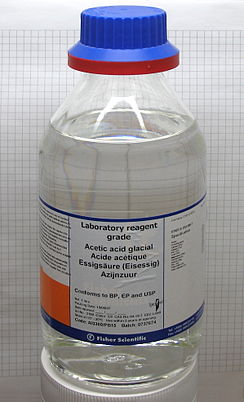 | |||
| Names | |||
|---|---|---|---|
| Preferred IUPAC name Acerb acid[3] | |||
| Systematic IUPAC proper name Ethanoic acid | |||
| Other names Vinegar (when dilute); Hydrogen acetate; Methanecarboxylic acid[1] [ii] | |||
| Identifiers | |||
| CAS Number |
| ||
| 3D model (JSmol) |
| ||
| 3DMet |
| ||
| Abbreviations | AcOH | ||
| Beilstein Reference | 506007 | ||
| ChEBI |
| ||
| ChEMBL |
| ||
| ChemSpider |
| ||
| DrugBank |
| ||
| ECHA InfoCard | 100.000.528 | ||
| EC Number |
| ||
| E number | E260 (preservatives) | ||
| Gmelin Reference | 1380 | ||
| IUPHAR/BPS |
| ||
| KEGG |
| ||
| MeSH | Acerb+acid | ||
| PubChem CID |
| ||
| RTECS number |
| ||
| UNII |
| ||
| United nations number | 2789 | ||
| CompTox Dashboard (EPA) |
| ||
| InChI
| |||
| SMILES
| |||
| Properties | |||
| Chemic formula | CHiiiCOOH | ||
| Molar mass | 60.052 chiliad·mol−i | ||
| Advent | Colourless liquid | ||
| Scent | Heavily vinegar-like | ||
| Density | ane.049 m/cm3 (liquid); one.27 g/cmiii (solid) | ||
| Melting bespeak | 16 to 17 °C; 61 to 62 °F; 289 to 290 Chiliad | ||
| Boiling indicate | 118 to 119 °C; 244 to 246 °F; 391 to 392 Grand | ||
| Solubility in water | Miscible | ||
| log P | -0.28[4] | ||
| Vapor pressure | 11.half-dozenmmHg (20 °C)[five] | ||
| Acerbity (pK a) | 4.756 | ||
| Conjugate base of operations | Acetate | ||
| Magnetic susceptibility (χ) | -31.54·10−6 cmthree/mol | ||
| Refractive alphabetize (due north D) | 1.371 (FiveD = eighteen.xix) | ||
| Viscosity | 1.22 mPa s | ||
| Dipole moment | 1.74 D | ||
| Thermochemistry | |||
| Rut capacity (C) | 123.i J K−i mol−1 | ||
| Std molar | 158.0 J K−1 mol−ane | ||
| Std enthalpy of | -483.88–483.sixteen kJ/mol | ||
| Std enthalpy of | -875.50–874.82 kJ/mol | ||
| Pharmacology | |||
| ATC code | G01AD02 (WHO) S02AA10 (WHO) | ||
| Hazards | |||
| GHS labelling: | |||
| Pictograms |   | ||
| Signal word | Danger | ||
| Chance statements | H226, H314 | ||
| Precautionary statements | P280, P305+P351+P338, P310 | ||
| NFPA 704 (fire diamond) | iii two 0 | ||
| Flash point | 40 °C (104 °F; 313 K) | ||
| Autoignition | 427 °C (801 °F; 700 K) | ||
| Explosive limits | 4–16% | ||
| Lethal dose or concentration (LD, LC): | |||
| LD50 (median dose) | 3.31 g kg−one, oral (rat) | ||
| LC50 (median concentration) | 5620 ppm (mouse, 1 hr) 16000 ppm (rat, 4 hr)[seven] | ||
| NIOSH (The states health exposure limits): | |||
| PEL (Permissible) | TWA 10 ppm (25 mg/grand3)[six] | ||
| REL (Recommended) | TWA ten ppm (25 mg/miii) ST 15 ppm (37 mg/m3)[6] | ||
| IDLH (Immediate danger) | fifty ppm[vi] | ||
| Related compounds | |||
| Related carboxylic acids | Formic acid Propionic acid | ||
| Related compounds | Acetaldehyde Acetamide Acetic anhydride Acetonitrile Acetyl chloride Ethanol Ethyl acetate Potassium acetate Sodium acetate Thioacetic acid | ||
| Supplementary data page | |||
| Acetic acid (data folio) | |||
| Except where otherwise noted, information are given for materials in their standard state (at 25 °C [77 °F], 100 kPa). Infobox references | |||
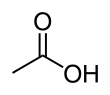
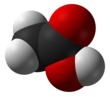
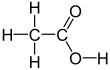


Acetic acid , systematically named ethanoic acid , is an acidic, colourless liquid and organic compound with the chemic formula CHthreeCOOH (also written equally CHthreeCOtwoH, C2H4O2 , or HC2HthreeOtwo ). Vinegar is at least 4% acetic acid by volume, making acerb acid the primary component of vinegar autonomously from h2o and other trace elements.
Acetic acid is the second simplest carboxylic acid (afterwards formic acid) and its functional group is methyl. It is an of import chemical reagent and industrial chemical, used primarily in the production of cellulose acetate for photographic film, polyvinyl acetate for woods glue, and synthetic fibres and fabrics. In households, diluted acerb acid is often used in descaling agents. In the food industry, acetic acid is controlled by the food additive lawmaking E260 as an acidity regulator and as a condiment. In biochemistry, the acetyl grouping, derived from acetic acrid, is cardinal to all forms of life. When leap to coenzyme A, it is cardinal to the metabolism of carbohydrates and fats.
The global demand for acetic acrid is about 6.v one thousand thousand metric tons per twelvemonth (t/a), of which approximately one.5 t/a is met by recycling; the remainder is manufactured from methanol.[8] Vinegar is mostly dilute acetic acid, often produced by fermentation and subsequent oxidation of ethanol.
Nomenclature [edit]
The trivial name "acetic acid" is the about unremarkably used and preferred IUPAC proper noun. The systematic name "ethanoic acid", a valid IUPAC name, is constructed according to the substitutive nomenclature.[9] The name "acerb acid" derives from "acetum", the Latin word for vinegar, and is related to the discussion "acid" itself.
"Glacial acetic acid" is a name for water-complimentary (anhydrous) acetic acid. Like to the German language name "Eisessig" ("water ice vinegar"), the name comes from the ice-like crystals that form slightly below room temperature at sixteen.6 °C (61.9 °F) (the presence of 0.1% water lowers its melting signal by 0.ii °C).[10]
A common symbol for acetic acid is AcOH, where Ac is the pseudoelement symbol representing the acetyl group CHiii−C(=O)−; the conjugate base of operations, acetate (CH3COO− ), is thus represented every bit AcO− .[11] (The symbol Ac for the acetyl functional group is non to exist confused with the symbol Ac for the element actinium; the context prevents confusion among organic chemists). To ameliorate reflect its structure, acetic acid is often written as CH3−C(O)OH, CH3−C(=O)OH, CH3COOH, and CH3COtwoH. In the context of acid–base reactions, the abbreviation HAc is sometimes used,[12] where Ac in this case is a symbol for acetate (rather than acetyl). Acetate is the ion resulting from loss of H+ from acetic acid. The name "acetate" can also refer to a common salt containing this anion, or an ester of acetic acid.[13]
Properties [edit]

Acidity [edit]
The hydrogen centre in the carboxyl group (−COOH) in carboxylic acids such as acetic acid can dissever from the molecule by ionization:
- CH3COOH ⇌ CHthreeCO − 2 + H+
Because of this release of the proton (H+ ), acetic acid has acidic graphic symbol. Acetic acid is a weak monoprotic acid. In aqueous solution, information technology has a pKa value of iv.76.[14] Its conjugate base is acetate (CH3COO− ). A ane.0 M solution (about the concentration of domestic vinegar) has a pH of 2.4, indicating that merely 0.4% of the acetic acid molecules are dissociated.[xv] Still, in very dilute (< x−6 M) solution acetic acid is >xc% dissociated.

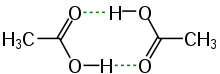
Cyclic dimer of acetic acrid; dashed green lines represent hydrogen bonds
Structure [edit]
In solid acetic acid, the molecules form chains, private molecules being interconnected past hydrogen bonds.[16] In the vapour at 120 °C (248 °F), dimers can exist detected. Dimers also occur in the liquid stage in dilute solutions in non-hydrogen-bonding solvents, and a certain extent in pure acerb acrid,[17] but are disrupted by hydrogen-bonding solvents. The dissociation enthalpy of the dimer is estimated at 65.0–66.0 kJ/mol, and the dissociation entropy at 154–157 J mol−1 K−1.[18] Other carboxylic acids engage in similar intermolecular hydrogen bonding interactions.[nineteen]
Solvent backdrop [edit]
Liquid acetic acid is a hydrophilic (polar) protic solvent, like to ethanol and water. With a relative static permittivity (dielectric abiding) of half dozen.two, it dissolves not only polar compounds such every bit inorganic salts and sugars, just likewise non-polar compounds such equally oils equally well as polar solutes. Information technology is miscible with polar and non-polar solvents such as water, chloroform, and hexane. With higher alkanes (starting with octane), acetic acid is not miscible at all compositions, and solubility of acetic acid in alkanes declines with longer northward-alkanes.[20] The solvent and miscibility backdrop of acetic acid make information technology a useful industrial chemical, for case, as a solvent in the product of dimethyl terephthalate.[8]
Biochemistry [edit]
At physiological pHs, acetic acid is unremarkably fully ionised to acetate.
The acetyl group, formally derived from acerb acrid, is fundamental to all forms of life. When bound to coenzyme A, it is key to the metabolism of carbohydrates and fats. Dissimilar longer-chain carboxylic acids (the fatty acids), acetic acid does non occur in natural triglycerides. However, the artificial triglyceride triacetin (glycerine triacetate) is a common food condiment and is establish in cosmetics and topical medicines.[21]
Acerb acid is produced and excreted by acetic acrid bacteria, notably the genus Acetobacter and Clostridium acetobutylicum. These bacteria are found universally in foodstuffs, water, and soil, and acetic acid is produced naturally as fruits and other foods spoil. Acerb acid is likewise a component of the vaginal lubrication of humans and other primates, where it appears to serve equally a mild antibacterial agent.[22]
Production [edit]

Purification and concentration plant for acerb acid in 1884
Acetic acid is produced industrially both synthetically and by bacterial fermentation. Near 75% of acerb acrid made for use in the chemical industry is fabricated by the carbonylation of methanol, explained below.[8] The biological road accounts for only nigh 10% of world production, but it remains of import for the production of vinegar considering many food purity laws require vinegar used in foods to exist of biological origin. Other processes are methyl formate isomerization, conversion of syngas to acetic acid, and gas stage oxidation of ethylene and ethanol.[23] Acetic acid is oftentimes a side production of different reactions, eastward.one thousand. during heterogeneous catalytic acrylic acid synthesis[24] [25] [26] or fermentative lactic acid production.[27] Acerb acrid tin be purified via fractional freezing using an ice bath. The water and other impurities volition remain liquid while the acerb acid volition precipitate out. As of 2003–2005, full worldwide production of virgin acerb acid[28] was estimated at 5 Mt/a (million tonnes per year), approximately half of which was produced in the Usa. European production was approximately i Mt/a and declining, while Japanese production was 0.vii Mt/a. Another 1.5 Mt were recycled each twelvemonth, bringing the total world market to six.5 Mt/a.[29] [xxx] Since so the global production has increased to 10.seven Mt/a (in 2010), and further; however, a slowing in this increase in production is predicted.[31] The ii biggest producers of virgin acetic acid are Celanese and BP Chemicals. Other major producers include Millennium Chemicals, Sterling Chemicals, Samsung, Eastman, and Svensk Etanolkemi.[32]
Methanol carbonylation [edit]
Most acetic acrid is produced by methanol carbonylation. In this process, methanol and carbon monoxide react to produce acetic acid according to the equation:

The process involves iodomethane as an intermediate, and occurs in three steps. A catalyst, metallic carbonyl, is needed for the carbonylation (pace 2).[33]
- CH3OH + Howdy → CH3I + H2O
- CH3I + CO → CHthreeCOI
- CH3COI + H2O → CH3COOH + HI
Two related processes exist for the carbonylation of methanol: the rhodium-catalyzed Monsanto procedure, and the iridium-catalyzed Cativa procedure. The latter process is greener and more efficient[34] and has largely supplanted the former process, often in the aforementioned production plants. Catalytic amounts of water are used in both processes, merely the Cativa process requires less, then the h2o-gas shift reaction is suppressed, and fewer past-products are formed.
By altering the procedure weather condition, acerb anhydride may likewise be produced on the aforementioned constitute using the rhodium catalysts.[35]
Acetaldehyde oxidation [edit]
Prior to the commercialization of the Monsanto procedure, most acetic acid was produced past oxidation of acetaldehyde. This remains the 2d-most-of import manufacturing method, although it is unremarkably not competitive with the carbonylation of methanol. The acetaldehyde can exist produced past hydration of acetylene. This was the dominant applied science in the early 1900s.[36]
Light naphtha components are readily oxidized by oxygen or even air to give peroxides, which decompose to produce acetic acrid according to the chemical equation, illustrated with butane:
- 2 C4H10 + five O2 → 4 CH3CO2H + two H2O
Such oxidations require metallic catalyst, such as the naphthenate salts of manganese, cobalt, and chromium.
The typical reaction is conducted at temperatures and pressures designed to exist as hot as possible while still keeping the butane a liquid. Typical reaction conditions are 150 °C (302 °F) and 55 atm.[37] Side-products may also form, including butanone, ethyl acetate, formic acid, and propionic acid. These side-products are also commercially valuable, and the reaction conditions may be altered to produce more of them where needed. However, the separation of acetic acrid from these by-products adds to the cost of the process.[38]
Under similar conditions and using like catalysts every bit are used for butane oxidation, the oxygen in air to produce acetic acrid tin can oxidize acetaldehyde.[38]
- 2 CHthreeCHO + O2 → ii CH3CO2H
Using modern catalysts, this reaction can have an acerb acid yield greater than 95%. The major side-products are ethyl acetate, formic acid, and formaldehyde, all of which have lower boiling points than acerb acid and are readily separated by distillation.[38]
Ethylene oxidation [edit]
Acetaldehyde may be prepared from ethylene via the Wacker procedure, and then oxidised as above.
In more than contempo times, chemical company Showa Denko, which opened an ethylene oxidation plant in Ōita, Nihon, in 1997, commercialised a cheaper unmarried-stage conversion of ethylene to acetic acid.[39] The procedure is catalyzed by a palladium metal catalyst supported on a heteropoly acid such equally silicotungstic acrid. A like procedure uses the same metal catalyst on silicotungstic acid and silica:[40]
- CiiH4 + O2 → CH3CO2H
It is thought to exist competitive with methanol carbonylation for smaller plants (100–250 kt/a), depending on the local price of ethylene. The approach will be based on utilizing a novel selective photocatalytic oxidation engineering for the selective oxidation of ethylene and ethane to acerb acid. Different traditional oxidation catalysts, the selective oxidation process will utilise UV light to produce acetic acid at ambient temperatures and force per unit area.
Oxidative fermentation [edit]
For most of human history, acetic acid leaner of the genus Acetobacter accept made acerb acid, in the grade of vinegar. Given sufficient oxygen, these bacteria can produce vinegar from a variety of alcoholic foodstuffs. Commonly used feeds include apple cider, wine, and fermented grain, malt, rice, or potato mashes. The overall chemic reaction facilitated by these leaner is:
- C2H5OH + Oii → CHthreeCOOH + H2O
A dilute alcohol solution inoculated with Acetobacter and kept in a warm, airy place will go vinegar over the course of a few months. Industrial vinegar-making methods accelerate this process by improving the supply of oxygen to the bacteria.[41]
The first batches of vinegar produced by fermentation probably followed errors in the winemaking process. If must is fermented at too high a temperature, acetobacter will overwhelm the yeast naturally occurring on the grapes. As the demand for vinegar for culinary, medical, and sanitary purposes increased, vintners quickly learned to use other organic materials to produce vinegar in the hot summer months before the grapes were ripe and ready for processing into vino. This method was slow, still, and not always successful, as the vintners did not sympathize the process.[42]
One of the outset modernistic commercial processes was the "fast method" or "German method", starting time practised in Germany in 1823. In this process, fermentation takes identify in a tower packed with wood shavings or charcoal. The alcohol-containing feed is trickled into the top of the tower, and fresh air supplied from the bottom by either natural or forced convection. The improved air supply in this procedure cut the time to prepare vinegar from months to weeks.[43]
Nowadays, nearly vinegar is made in submerged tank civilisation, first described in 1949 by Otto Hromatka and Heinrich Ebner.[44] In this method, booze is fermented to vinegar in a continuously stirred tank, and oxygen is supplied by bubbling air through the solution. Using modernistic applications of this method, vinegar of 15% acerb acid tin exist prepared in only 24 hours in batch process, even 20% in lx-hour fed-batch process.[42]
Anaerobic fermentation [edit]
Species of anaerobic bacteria, including members of the genus Clostridium or Acetobacterium can convert sugars to acetic acid direct without creating ethanol as an intermediate. The overall chemic reaction conducted past these leaner may be represented every bit:
- C6H12O6 → iii CHiiiCOOH
These acetogenic leaner produce acerb acid from one-carbon compounds, including methanol, carbon monoxide, or a mixture of carbon dioxide and hydrogen:
- 2 CO2 + iv H2 → CH3COOH + two H2O
This ability of Clostridium to metabolize sugars direct, or to produce acerb acrid from less costly inputs, suggests that these bacteria could produce acerb acrid more efficiently than ethanol-oxidizers like Acetobacter. Notwithstanding, Clostridium leaner are less acid-tolerant than Acetobacter. Even the most acrid-tolerant Clostridium strains can produce vinegar in concentrations of merely a few per cent, compared to Acetobacter strains that can produce vinegar in concentrations upward to twenty%. At present, information technology remains more cost-effective to produce vinegar using Acetobacter, rather than using Clostridium and concentrating information technology. Equally a result, although acetogenic leaner take been known since 1940, their industrial use is confined to a few niche applications.[45]
Uses [edit]
Acetic acid is a chemical reagent for the production of chemical compounds. The largest unmarried use of acetic acid is in the production of vinyl acetate monomer, closely followed by acetic anhydride and ester production. The book of acerb acid used in vinegar is insufficiently small.[eight] [30]
Vinyl acetate monomer [edit]
The primary apply of acetic acrid is the product of vinyl acetate monomer (VAM). In 2008, this application was estimated to eat a third of the world's production of acetic acid.[eight] The reaction consists of ethylene and acetic acid with oxygen over a palladium goad, conducted in the gas phase.[46]
- two H3C−COOH + ii C2H4 + O2 → 2 HiiiC−CO−O−CH=CH2 + two HiiO
Vinyl acetate can be polymerised to polyvinyl acetate or other polymers, which are components in paints and adhesives.[46]
Ester product [edit]
The major esters of acetic acid are commonly used every bit solvents for inks, paints and coatings. The esters include ethyl acetate, n-butyl acetate, isobutyl acetate, and propyl acetate. They are typically produced past catalyzed reaction from acetic acid and the respective alcohol:
- CHiiiCOO−H + HO−R → CH3COO−R + HtwoO, R = general alkyl group
For example, acetic acid and ethanol gives ethyl acetate and water.
- CH3COO−H + HO−CH2CH3 → CHthreeCOO−CH2CHiii + H2O
Virtually acetate esters, nevertheless, are produced from acetaldehyde using the Tishchenko reaction. In improver, ether acetates are used as solvents for nitrocellulose, acrylic lacquers, varnish removers, and woods stains. First, glycol monoethers are produced from ethylene oxide or propylene oxide with alcohol, which are then esterified with acetic acid. The three major products are ethylene glycol monoethyl ether acetate (EEA), ethylene glycol monobutyl ether acetate (EBA), and propylene glycol monomethyl ether acetate (PMA, more commonly known as PGMEA in semiconductor manufacturing processes, where it is used as a resist solvent). This application consumes about 15% to 20% of worldwide acerb acid. Ether acetates, for example EEA, accept been shown to be harmful to human reproduction.[30]
Acetic anhydride [edit]
The product of the condensation of two molecules of acerb acid is acetic anhydride. The worldwide production of acetic anhydride is a major application, and uses approximately 25% to 30% of the global production of acetic acrid. The primary process involves aridity of acetic acrid to give ketene at 700–750 °C. Ketene is thereafter reacted with acerb acid to obtain the anhydride:[47]
- CH3CO2H → CH2=C=O + HiiO
- CH3CO2H + CHii=C=O → (CHthreeCO)2O
Acetic anhydride is an acetylation agent. As such, its major awarding is for cellulose acetate, a synthetic textile also used for photographic film. Acetic anhydride is besides a reagent for the product of heroin and other compounds.[47]
Utilise as solvent [edit]
Glacial acetic acrid is an excellent polar protic solvent, every bit noted higher up. Information technology is frequently used equally a solvent for recrystallization to purify organic compounds. Acetic acid is used equally a solvent in the product of terephthalic acid (TPA), the raw material for polyethylene terephthalate (PET). In 2006, most xx% of acetic acrid was used for TPA product.[30]
Acetic acid is often used equally a solvent for reactions involving carbocations, such as Friedel-Crafts alkylation. For example, i stage in the commercial manufacture of synthetic camphor involves a Wagner-Meerwein rearrangement of camphene to isobornyl acetate; here acetic acid acts both equally a solvent and as a nucleophile to trap the rearranged carbocation.[48]
Glacial acetic acid is used in analytical chemical science for the estimation of weakly alkaline substances such equally organic amides. Glacial acerb acid is a much weaker base of operations than water, so the amide behaves as a potent base in this medium. Information technology then can be titrated using a solution in glacial acetic acrid of a very potent acid, such every bit perchloric acid.[49]
Medical use [edit]
Acetic acid injection into a tumor has been used to care for cancer since the 1800s.[50] [51]
Acerb acid is used as part of cervical cancer screening in many areas in the developing world.[52] The acrid is applied to the neck and if an area of white appears after about a infinitesimal the test is positive.[52]
Acetic acrid is an effective antiseptic when used equally a i% solution, with broad spectrum of activity against streptococci, staphylococci, pseudomonas, enterococci and others.[53] [54] [55] It may be used to care for pare infections caused by pseudomonas strains resistant to typical antibiotics.[56]
While diluted acetic acrid is used in iontophoresis, no high quality evidence supports this treatment for rotator cuff disease.[57] [58]
As a handling for otitis externa, it is on the World Wellness Organization's List of Essential Medicines.[59] [60]
Foods [edit]
Acetic acid has 349 kcal (1,460 kJ) per 100 thou.[61] Vinegar is typically no less than 4% acetic acrid past mass.[62] [63] [64] Legal limits on acetic acid content vary past jurisdiction. Vinegar is used straight as a condiment, and in the pickling of vegetables and other foods. Tabular array vinegar tends to be more diluted (4% to 8% acetic acid), while commercial food pickling employs solutions that are more than concentrated. The proportion of acetic acid used worldwide as vinegar is not as large as commercial uses, but is by far the oldest and all-time-known application.[65]
Reactions [edit]
Organic chemistry [edit]
Two typical organic reactions of acerb acid
Acetic acid undergoes the typical chemical reactions of a carboxylic acid. Upon handling with a standard base, it converts to metallic acetate and water. With strong bases (e.g., organolithium reagents), information technology can be doubly deprotonated to give LiCHiiCOOLi. Reduction of acetic acid gives ethanol. The OH group is the main site of reaction, as illustrated by the conversion of acetic acid to acetyl chloride. Other substitution derivatives include acetic anhydride; this anhydride is produced by loss of water from two molecules of acetic acid. Esters of acerb acrid tin can besides be formed via Fischer esterification, and amides can exist formed. When heated above 440 °C (824 °F), acetic acrid decomposes to produce carbon dioxide and methane, or to produce ketene and h2o:[66] [67] [68]
- CHthreeCOOH → CHiv + CO2
- CH3COOH → CH2=C=O + H2O
Reactions with inorganic compounds [edit]
Acetic acid is mildly corrosive to metals including fe, magnesium, and zinc, forming hydrogen gas and salts chosen acetates:
- Mg + 2 CHiiiCOOH → (CH3COO)twoMg + H2
Considering aluminium forms a passivating acid-resistant motion-picture show of aluminium oxide, aluminium tanks are used to transport acetic acrid. Metal acetates tin besides be prepared from acetic acrid and an appropriate base, as in the popular "baking soda + vinegar" reaction giving off sodium acetate:
- NaHCO3 + CHiiiCOOH → CH3COONa + CO2 + H2O
A color reaction for salts of acetic acid is iron(III) chloride solution, which results in a deeply cherry colour that disappears after acidification.[69] A more sensitive test uses lanthanum nitrate with iodine and ammonia to give a blueish solution.[seventy] Acetates when heated with arsenic trioxide form cacodyl oxide, which can be detected past its malodorous vapours.[71]
Other derivatives [edit]
Organic or inorganic salts are produced from acerb acrid. Some commercially meaning derivatives:
- Sodium acetate, used in the textile industry and as a nutrient preservative (E262).
- Copper(Ii) acetate, used every bit a pigment and a fungicide.
- Aluminium acetate and atomic number 26(II) acetate—used equally mordants for dyes.
- Palladium(Two) acetate, used equally a catalyst for organic coupling reactions such as the Heck reaction.
Halogenated acetic acids are produced from acerb acid. Some commercially meaning derivatives:
- Chloroacetic acid (monochloroacetic acrid, MCA), dichloroacetic acid (considered a by-product), and trichloroacetic acid. MCA is used in the manufacture of indigo dye.
- Bromoacetic acrid, which is esterified to produce the reagent ethyl bromoacetate.
- Trifluoroacetic acrid, which is a common reagent in organic synthesis.
Amounts of acetic acrid used in these other applications together business relationship for some other 5–10% of acerb acid utilize worldwide.[30]
History [edit]
Vinegar was known early in civilisation equally the natural result of exposure of beer and wine to air, considering acetic acid-producing bacteria are nowadays globally. The use of acetic acrid in abracadabra extends into the 3rd century BC, when the Greek philosopher Theophrastus described how vinegar acted on metals to produce pigments useful in art, including white lead (lead carbonate) and verdigris, a green mixture of copper salts including copper(Two) acetate. Aboriginal Romans boiled soured wine to produce a highly sweet syrup called sapa. Sapa that was produced in lead pots was rich in lead acetate, a sweet substance also called sugar of lead or sugar of Saturn, which contributed to lead poisoning among the Roman elite.[72]
In the 16th-century High german alchemist Andreas Libavius described the production of acetone from the dry distillation of lead acetate, ketonic decarboxylation. The presence of water in vinegar has such a profound outcome on acerb acid's properties that for centuries chemists believed that glacial acetic acid and the acid establish in vinegar were two unlike substances. French chemist Pierre Adet proved them identical.[72] [73]
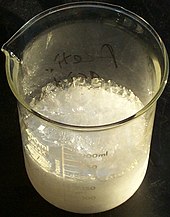
Crystallised acetic acid.
In 1845 High german pharmacist Hermann Kolbe synthesised acerb acid from inorganic compounds for the beginning time. This reaction sequence consisted of chlorination of carbon disulfide to carbon tetrachloride, followed past pyrolysis to tetrachloroethylene and aqueous chlorination to trichloroacetic acid, and concluded with electrolytic reduction to acetic acid.[74]
Past 1910, about glacial acetic acid was obtained from the pyroligneous liquor, a product of the distillation of wood. The acetic acid was isolated by handling with milk of lime, and the resulting calcium acetate was and so acidified with sulfuric acid to recover acetic acrid. At that time, Deutschland was producing 10,000 tons of glacial acetic acid, around xxx% of which was used for the manufacture of indigo dye.[72] [75]
Because both methanol and carbon monoxide are commodity raw materials, methanol carbonylation long appeared to be attractive precursors to acetic acid. Henri Dreyfus at British Celanese adult a methanol carbonylation pilot plant equally early on as 1925.[76] However, a lack of practical materials that could contain the corrosive reaction mixture at the high pressures needed (200 atm or more than) discouraged commercialization of these routes. The starting time commercial methanol carbonylation process, which used a cobalt catalyst, was developed by German language chemic company BASF in 1963. In 1968, a rhodium-based goad (cis−[Rh(CO)iiI2]− ) was discovered that could operate efficiently at lower pressure with nearly no by-products. US chemic company Monsanto Company built the first plant using this catalyst in 1970, and rhodium-catalyzed methanol carbonylation became the ascendant method of acetic acrid product (run across Monsanto process). In the late 1990s, the chemicals company BP Chemicals commercialised the Cativa catalyst ([Ir(CO)twoI2]− ), which is promoted by iridium[77] for greater efficiency. This iridium-catalyzed Cativa process is greener and more efficient[34] and has largely supplanted the Monsanto process, oftentimes in the same production plants.
Interstellar medium [edit]
Interstellar acetic acid was discovered in 1996 by a team led by David Mehringer[78] using the sometime Berkeley-Illinois-Maryland Association array at the Hat Creek Radio Observatory and the one-time Millimeter Array located at the Owens Valley Radio Observatory. Information technology was first detected in the Sagittarius B2 North molecular cloud (also known as the Sgr B2 Large Molecule Heimat source). Acetic acid has the distinction of being the first molecule discovered in the interstellar medium using solely radio interferometers; in all previous ISM molecular discoveries made in the millimetre and centimetre wavelength regimes, unmarried dish radio telescopes were at least partly responsible for the detections.[78]
Health furnishings and safety [edit]
Concentrated acetic acid is corrosive to skin.[79] [80] These burns or blisters may not appear until hours after exposure.
Prolonged inhalation exposure (eight hours) to acetic acid vapours at 10 ppm tin can produce some irritation of optics, nose, and throat; at 100 ppm marked lung irritation and possible harm to lungs, eyes, and skin may outcome. Vapour concentrations of 1,000 ppm cause marked irritation of optics, nose and upper respiratory tract and cannot be tolerated. These predictions were based on fauna experiments and industrial exposure.
In 12 workers exposed for two or more years to acetic acid airborne average concentration of 51 ppm (estimated), produced symptoms of conjunctive irritation, upper respiratory tract irritation, and hyperkeratotic dermatitis. Exposure to 50 ppm or more is intolerable to nigh persons and results in intensive lacrimation and irritation of the eyes, nose, and pharynx, with pharyngeal oedema and chronic bronchitis. Unacclimatised humans experience farthermost eye and nasal irritation at concentrations in excess of 25 ppm, and conjunctivitis from concentrations beneath ten ppm has been reported. In a written report of five workers exposed for seven to 12 years to concentrations of lxxx to 200 ppm at peaks, the primary findings were blackening and hyperkeratosis of the peel of the easily, conjunctivitis (only no corneal impairment), bronchitis and pharyngitis, and erosion of the exposed teeth (incisors and canines).[81]
The hazards of solutions of acetic acid depend on the concentration. The following table lists the Eu nomenclature of acetic acid solutions:[82] [ citation needed ]
| Concentration by weight | Molarity | GHS pictograms | H-Phrases |
|---|---|---|---|
| 10–25% | 1.67–4.sixteen mol/L |  | H315 |
| 25–90% | 4.16–14.99 mol/L | | H314 |
| >90% | >14.99 mol/L | | H226, H314 |
Full-bodied acetic acid can be ignited only with difficulty at standard temperature and pressure, but becomes a flammable run a risk in temperatures greater than 39 °C (102 °F), and can course explosive mixtures with air at higher temperatures (explosive limits: 5.four–xvi%).
Meet also [edit]
- Acetic acid (information page)
- Acids in wine
References [edit]
- ^ Scientific literature reviews on generally recognised as safe (GRAS) food ingredients. National Technical Information Service. 1974. p. 1.
- ^ "Chemistry", volume 5, Encyclopædia Britannica, 1961, folio 374
- ^ Nomenclature of Organic Chemistry : IUPAC Recommendations and Preferred Names 2013 (Blue Book). Cambridge: The Royal Society of Chemistry. 2014. p. 745. doi:10.1039/9781849733069-00648. ISBN978-0-85404-182-iv.
- ^ "acetic acid_msds".
- ^ Lange'due south Handbook of Chemistry, 10th ed.
- ^ a b c NIOSH Pocket Guide to Chemical Hazards. "#0002". National Institute for Occupational Condom and Wellness (NIOSH).
- ^ "Acerb acid". Immediately Dangerous to Life or Health Concentrations (IDLH). National Institute for Occupational Safety and Health (NIOSH).
- ^ a b c d e Cheung, Hosea; Tanke, Robin S.; Torrence, Chiliad. Paul. "Acetic Acid". Ullmann's Encyclopedia of Industrial Chemical science. Weinheim: Wiley-VCH. doi:10.1002/14356007.a01_045.pub2.
- ^ IUPAC Provisional Recommendations 2004 Chapter P-12.1; page four
- ^ Armarego, W.L.F.; Chai, Christina (2009). Purification of Laboratory Chemicals, 6th edition. Butterworth-Heinemann. ISBN978-one-85617-567-8.
- ^ Cooper, Caroline (nine August 2010). Organic Chemist's Desk Reference (2 ed.). CRC Printing. pp. 102–104. ISBN978-ane-4398-1166-5.
- ^ DeSousa, Luís R. (1995). Common Medical Abbreviations. Cengage Learning. p. 97. ISBN978-0-8273-6643-5.
- ^ Hendrickson, James B.; Cram, Donald J.; Hammond, George S. (1970). Organic Chemistry (3 ed.). Tokyo: McGraw Hill Kogakusha. p. 135.
- ^ Goldberg, R.; Kishore, Due north.; Lennen, R. (2002). "Thermodynamic Quantities for the Ionization Reactions of Buffers" (PDF). Journal of Physical and Chemic Reference Information. 31 (2): 231–370. Bibcode:2002JPCRD..31..231G. doi:10.1063/1.1416902. Archived from the original (PDF) on 6 October 2008.
- ^ [H3O+] = 10−2.4 = 0.4%
- ^ Jones, R. E.; Templeton, D.H. (1958). "The crystal construction of acetic acid" (PDF). Acta Crystallographica. 11 (seven): 484–487. doi:10.1107/S0365110X58001341. hdl:2027/mdp.39015077597907.
- ^ Briggs, James M.; Toan B. Nguyen; William L. Jorgensen (1991). "Monte Carlo simulations of liquid acetic acid and methyl acetate with the OPLS potential functions". Periodical of Physical Chemistry. 95 (8): 3315–3322. doi:10.1021/j100161a065.
- ^ Togeas, James B. (2005). "Acetic Acid Vapor: 2. A Statistical Mechanical Critique of Vapor Density Experiments". Periodical of Physical Chemistry A. 109 (24): 5438–5444. Bibcode:2005JPCA..109.5438T. doi:ten.1021/jp058004j. PMID 16839071.
- ^ McMurry, John (2000). Organic Chemistry (5 ed.). Brooks/Cole. p. 818. ISBN978-0-534-37366-5.
- ^ Zieborak, Chiliad.; Olszewski, K. (1958). Message de fifty'Académie Polonaise des Sciences, Série des Sciences Chimiques, Géologiques et Géographiques. six (2): 3315–3322.
{{cite journal}}: CS1 maint: untitled periodical (link) - ^ Fiume, 1000. Z.; Corrective Ingredients Review Practiced Panel (June 2003). "Last study on the safety assessment of triacetin". International Journal of Toxicology. 22 (Suppl 2): i–10. doi:x.1080/747398359. PMID 14555416.
- ^ Buckingham, J., ed. (1996). Dictionary of Organic Compounds. Vol. i (6th ed.). London: Chapman & Hall. ISBN978-0-412-54090-5.
- ^ Yoneda, Noriyuki; Kusano, Satoru; Yasui, Makoto; Pujado, Peter; Wilcher, Steve (2001). "Recent advances in processes and catalysts for the production of acerb acid". Practical Catalysis A: General. 221 (1–ii): 253–265. doi:10.1016/S0926-860X(01)00800-6.
- ^ Kinetic studies of propane oxidation on Mo and V based mixed oxide catalysts (PDF). 2011.
- ^ Naumann d'Alnoncourt, Raoul; Csepei, Lénárd-István; Hävecker, Michael; Girgsdies, Frank; Schuster, Manfred E.; Schlögl, Robert; Trunschke, Annette (2014). "The reaction network in propane oxidation over stage-pure MoVTeNb M1 oxide catalysts" (PDF). Journal of Catalysis. 311: 369–385. doi:10.1016/j.jcat.2013.12.008. hdl:11858/00-001M-0000-0014-F434-5. Archived from the original (PDF) on 15 February 2016. Retrieved 29 October 2017.
- ^ Hävecker, Michael; Wrabetz, Sabine; Kröhnert, Jutta; Csepei, Lenard-Istvan; Naumann d'Alnoncourt, Raoul; Kolen'Ko, Yury Five.; Girgsdies, Frank; Schlögl, Robert; Trunschke, Annette (2014). "Surface chemical science of phase-pure M1 MoVTeNb oxide during operation in selective oxidation of propane to acrylic acid" (PDF). Journal of Catalysis. 285: 48–sixty. doi:10.1016/j.jcat.2011.09.012. hdl:11858/00-001M-0000-0012-1BEB-F. Archived from the original (PDF) on 30 Oct 2016. Retrieved 29 October 2017.
- ^ Costa, Vanessa Moreira; Basso, Thiago Olitta; Angeloni, Luis Henrique Poleto; Oetterer, Marilia; Basso, Luiz Carlos (2008). "Production of acerb acid, ethanol and optical isomers of lactic acrid by Lactobacillus strain isolated from industrial ethanol fermentations". Ciência e Agrotecnologia. 32 (2): 503–509. doi:10.1590/S1413-70542008000200025.
- ^ Acetic acid that is manufactured by intent, rather than recovered from processing (such equally the production of cellulose acetates, polyvinyl booze operations, and numerous acerb anhydride acylations).
- ^ "Production report". Chemical & Engineering News: 67–76. 11 July 2005.
- ^ a b c d east Malveda, Michael; Funada, Chiyo (2003). "Acerb Acid". Chemicals Economic Handbook. SRI International. p. 602.5000. Archived from the original on 14 Oct 2011.
- ^ Acetic Acid. SRI Consulting.
- ^ "Reportlinker Adds Global Acerb Acid Market Analysis and Forecasts". Marketplace Inquiry Database. June 2014. p. contents.
- ^ Yoneda, Due north.; Kusano, S.; Yasui, Grand.; Pujado, P.; Wilcher, S. (2001). "Recent advances in processes and catalysts for the product of acetic acid". Applied Catalysis A: General. 221 (1–2): 253–265. doi:x.1016/S0926-860X(01)00800-6.
- ^ a b Lancaster, Mike (2002). Green Chemistry, an Introductory Text . Cambridge: Royal Social club of Chemistry. pp. 262–266. ISBN978-0-85404-620-ane.
- ^ Zoeller, J. R.; Agreda, 5. H.; Melt, Due south. L.; Lafferty, N. L.; Polichnowski, South. W.; Swimming, D. M. (1992). "Eastman Chemical Visitor Acetic Anhydride Process". Catalysis Today. xiii (1): 73–91. doi:10.1016/0920-5861(92)80188-S.
- ^ Hintermann, Lukas; Labonne, Aurélie (2007). "Catalytic Hydration of Alkynes and Its Application in Synthesis". Synthesis. 2007 (8): 1121. doi:x.1055/due south-2007-966002.
- ^ Chenier, Philip J. (2002). Survey of Industrial Chemical science (3 ed.). Springer. p. 151. ISBN978-0-306-47246-6.
- ^ a b c Sano, Ken‐ichi; Uchida, Hiroshi; Wakabayashi, Syoichirou (1999). "A new process for acetic acid product by straight oxidation of ethylene". Catalysis Surveys from Nippon. iii (1): 55–60. doi:ten.1023/A:1019003230537. ISSN 1384-6574. S2CID 93855717.
- ^ Sano, Ken-ichi; Uchida, Hiroshi; Wakabayashi, Syoichirou (1999). "A new process for acetic acid production past direct oxidation of ethylene". Catalyst Surveys from Japan. 3: 66–60. doi:10.1023/A:1019003230537. S2CID 93855717.
- ^ Misono, Makoto (2009). "Recent progress in the practical applications of heteropolyacid and perovskite catalysts: Catalytic engineering science for the sustainable society". Catalysis Today. 144 (3–iv): 285–291. doi:10.1016/j.cattod.2008.10.054.
- ^ Chotani, Gopal Yard.; Gaertner, Alfred L.; Arbige, Michael V.; Dodge, Timothy C. (2007). "Industrial Biotechnology: Discovery to Commitment". Kent and Riegel's Handbook of Industrial Chemistry and Biotechnology. Kent and Riegel's Handbook of Industrial Chemistry and Biotechnology. Springer. pp. 32–34. Bibcode:2007karh.book....... ISBN978-0-387-27842-1.
- ^ a b Hromatka, Otto; Ebner, Heinrich (1959). "Vinegar past Submerged Oxidative Fermentation". Industrial & Engineering Chemical science. 51 (10): 1279–1280. doi:10.1021/ie50598a033.
- ^ Partridge, Everett P. (1931). "Acetic Acid and Cellulose Acetate in the United States A General Survey of Economic and Technical Developments". Industrial & Engineering Chemical science. 23 (5): 482–498. doi:x.1021/ie50257a005.
- ^ Hromatka, O.; Ebner, H. (1949). "Investigations on vinegar fermentation: Generator for vinegar fermentation and aeration procedures". Enzymologia. 13: 369.
- ^ Sim, Jia Huey; Kamaruddin, Azlina Harun; Long, Wei Sing; Najafpour, Ghasem (2007). "Clostridium aceticum—A potential organism in catalyzing carbon monoxide to acerb acid: Application of response surface methodology". Enzyme and Microbial Technology. 40 (v): 1234–1243. doi:10.1016/j.enzmictec.2006.09.017.
- ^ a b Roscher, Günter. "Vinyl Esters". Ullmann's Encyclopedia of Industrial Chemistry. Weinheim: Wiley-VCH. doi:x.1002/14356007.a27_419.
- ^ a b Held, Heimo; Rengstl, Alfred; Mayer, Dieter. "Acetic Anhydride and Mixed Fatty Acrid Anhydrides". Ullmann'south Encyclopedia of Industrial Chemistry. Weinheim: Wiley-VCH. doi:10.1002/14356007.a01_065.
- ^ Sell, Charles S. (2006). "4.2.xv Bicyclic Monoterpenoids". The Chemistry of Fragrances: From Perfumer to Consumer. RSC Paperbacks Series. Vol. 38 (2 ed.). Great Britain: Royal Society of Chemical science. p. lxxx. ISBN978-0-85404-824-3.
- ^ Felgner, Andrea. "Decision of Water Content in Perchloric acid 0,i mol/L in acetic acid Using Karl Fischer Titration". Sigma-Aldrich. Retrieved 27 July 2017.
- ^ Barclay, John (1866). "Injection of Acetic Acrid in Cancer". Br Med J. ii (305): 512. doi:ten.1136/bmj.2.305.512-a. PMC2310334.
- ^ Shibata North. (1998). "Percutaneous ethanol and acetic acid injection for liver metastasis from colon cancer". Gan to Kagaku Ryoho. 25 (5): 751–5. PMID 9571976.
- ^ a b Fokom-Domgue, J.; Combescure, C.; Fokom-Defo, 5.; Tebeu, P. G.; Vassilakos, P.; Kengne, A. P.; Petignat, P. (3 July 2015). "Performance of culling strategies for primary cervical cancer screening in sub-Saharan Africa: systematic review and meta-analysis of diagnostic examination accuracy studies". BMJ (Clinical Research Ed.). 351: h3084. doi:10.1136/bmj.h3084. PMC4490835. PMID 26142020.
- ^ Madhusudhan, V. L. (8 April 2015). "Efficacy of 1% acerb acid in the handling of chronic wounds infected with Pseudomonas aeruginosa: prospective randomised controlled clinical trial". International Wound Journal. thirteen (half dozen): 1129–1136. doi:ten.1111/iwj.12428. ISSN 1742-481X. PMC7949569. PMID 25851059. S2CID 4767974.
- ^ Ryssel, H.; Kloeters, O.; Germann, G.; Schäfer, Th; Wiedemann, G.; Oehlbauer, M. (1 August 2009). "The antimicrobial event of acerb acid—an alternative to common local antiseptics?". Burns. 35 (v): 695–700. doi:x.1016/j.burns.2008.11.009. ISSN 1879-1409. PMID 19286325.
- ^ "Antiseptics on Wounds: An Area of Controversy". www.medscape.com . Retrieved 15 Baronial 2016.
- ^ Nagoba, B. S.; Selkar, S. P.; Wadher, B. J.; Gandhi, R. C. (December 2013). "Acetic acid treatment of pseudomonal wound infections—a review". Journal of Infection and Public Health. 6 (vi): 410–five. doi:x.1016/j.jiph.2013.05.005. PMID 23999348.
- ^ Page, M. J.; Greenish, Due south.; Mrocki, M. A.; Surace, Due south. J.; Deitch, J.; McBain, B.; Lyttle, N.; Buchbinder, R. (10 June 2016). "Electrotherapy modalities for rotator cuff disease". The Cochrane Database of Systematic Reviews. 2016 (half dozen): CD012225. doi:10.1002/14651858.CD012225. PMC8570637. PMID 27283591.
- ^ Habif, Thomas P. (2009). Clinical Dermatology (5 ed.). Elsevier Health Sciences. p. 367. ISBN978-0-323-08037-8.
- ^ Globe Health Organization (2019). World Wellness Arrangement model listing of essential medicines: 21st listing 2019. Geneva: World Health Organization. hdl:10665/325771. WHO/MVP/EMP/IAU/2019.06. License: CC By-NC-SA 3.0 IGO.
- ^ World Health Organization (2021). Earth Health Organization model list of essential medicines: 22nd list (2021). Geneva: World Health Organization. hdl:10665/345533. WHO/MHP/HPS/EML/2021.02.
- ^ Greenfield, Heather; Southgate, D.A.T. (2003). Nutrient Limerick Data: Production, Management and Use. Rome: FAO. p. 146. ISBN9789251049495.
- ^ "CPG Sec. 525.825 Vinegar, Definitions" (PDF). United states of america Nutrient and Drug Administration. March 1995.
- ^ "Departmental Consolidation of the Food and Drugs Human action and the Food and Drug Regulations – Office B – Sectionalisation nineteen" (PDF). Wellness Canada. August 2018. p. 591.
- ^ "Commission Regulation (EU) 2016/263". Official Journal of the Eu. European Commission. February 2016.
- ^ Bernthsen, A.; Sudborough, J. J. (1922). Organic Chemistry. London: Blackie and Son. p. 155.
- ^ Blake, P. Grand.; Jackson, Thou. E. (1968). "The thermal decomposition of acetic acrid". Journal of the Chemical Society B: Physical Organic: 1153–1155. doi:10.1039/J29680001153.
- ^ Bamford, C. H.; Dewar, M. J. Due south. (1949). "608. The thermal decomposition of acetic acrid". Journal of the Chemical Society: 2877. doi:x.1039/JR9490002877.
- ^ Duan, Xiaofeng; Page, Michael (1995). "Theoretical Investigation of Competing Mechanisms in the Thermal Unimolecular Decomposition of Acetic Acid and the Hydration Reaction of Ketene". Periodical of the American Chemic Society. 117 (eighteen): 5114–5119. doi:x.1021/ja00123a013. ISSN 0002-7863.
- ^ Charlot, G.; Murray, R. Chiliad. (1954). Qualitative Inorganic Analysis (iv ed.). Loving cup Annal. p. 110.
- ^ Neelakantam, K.; Row, L Ramachangra (1940). "The Lanthanum Nitrate Test for Acetatein Inorganic Qualitative Analysis" (PDF) . Retrieved 5 June 2013.
- ^ Brantley, L. R.; Cromwell, T. M.; Mead, J. F. (1947). "Detection of acetate ion by the reaction with arsenious oxide to grade cacodyl oxide". Periodical of Chemical Education. 24 (7): 353. Bibcode:1947JChEd..24..353B. doi:10.1021/ed024p353. ISSN 0021-9584.
- ^ a b c Martin, Geoffrey (1917). Industrial and Manufacturing Chemistry (Function 1, Organic ed.). London: Crosby Lockwood. pp. 330–331.
- ^ Adet, P. A. (1798). "Mémoire sur l'acide acétique (Memoir on acetic acid)". Annales de Chimie. 27: 299–319.
- ^ Goldwhite, Harold (September 2003). "This calendar month in chemical history" (PDF). New Haven Section Message American Chemical Gild. 20 (three): 4. Archived from the original (PDF) on 4 March 2009.
- ^ Schweppe, Helmut (1979). "Identification of dyes on old textiles". Journal of the American Found for Conservation. 19 (one/three): 14–23. doi:x.2307/3179569. JSTOR 3179569. Archived from the original on 29 May 2009. Retrieved 12 October 2005.
- ^ Wagner, Frank Due south. (1978). "Acetic acid". In Grayson, Martin (ed.). Kirk-Othmer Encyclopedia of Chemical Technology (tertiary ed.). New York: John Wiley & Sons.
- ^ Industrial Organic Chemicals, Harold A. Wittcoff, Bryan G. Reuben, Jeffery S. Plotkin
- ^ a b Mehringer, David 1000.; et al. (1997). "Detection and Confirmation of Interstellar Acetic Acid". Astrophysical Journal Messages. 480 (ane): L71. Bibcode:1997ApJ...480L..71M. doi:ten.1086/310612.
- ^ "ICSC 0363 – ACETIC ACID". International Programme on Chemical Safety. 5 June 2010.
- ^ "Occupational Safety and Health Guideline for Acetic Acid" (PDF). Centers for Disease Control and Prevention. Retrieved eight May 2013.
- ^ Sherertz, Peter C. (i June 1994), Acetic Acid (PDF), Virginia Department of Wellness Division of Health Hazards Control, archived from the original (PDF) on 4 March 2016
- ^ "Details". hcis.safeworkaustralia.gov.au.
External links [edit]

Look up acerb in Wiktionary, the gratuitous lexicon.
- International Chemical Safety Card 0363
- National Pollutant Inventory – Acetic acid fact canvas
- NIOSH Pocket Guide to Chemical Hazards
- Method for sampling and analysis
- 29 CFR 1910.1000, Table Z-ane (US Permissible exposure limits)
- ChemSub Online: Acetic acid
- Calculation of vapor pressure, liquid density, dynamic liquid viscosity, surface tension of acetic acid
- Acetic acrid bound to proteins in the PDB
- Swedish Chemicals Agency. Information sail – Acetic Acid
- Process Menstruum sheet of Acetic acrid Production by the Carbonylation of Methanol

0.2 M Acetic Acid Ph,
Source: https://en.wikipedia.org/wiki/Acetic_acid
Posted by: newkirkseleas.blogspot.com
0 Response to "0.2 M Acetic Acid Ph"
Post a Comment